Focus On: Roe Halper

Roe Halper was born Brooklyn in 1937 and was raised in White Plains. She studied art at Vassar and Skidmore and became an art teacher and in 1960 she and her husband Charles moved to Westport. A successful artist throughout her life, Roe became known for her low-relief woodcarvings portraying the Civil Rights era including the Birmingham Series which she was inspired to create in response to the events happening during the 1960s. An inspired creative who draws inspiration from the world around her, Roe Halper has worked in various mediums from paper to wood to kinetic sculpture, flowers to book-printing and more. She has taught art classes from her home studio for more than 40 years. 

My husband and I were very young when we decided to move to Connecticut.  I was 23 years old. That was in 1960. We came here to be far enough away from both sets of parents. It was a toll call, but near enough so they could visit and not sleep over. We moved to Westport because the New York Times Magazine had an article about buying Longshore Club. My husband was a par golfer and this is the only way we could afford for him to be able to play golf. Even though we didn’t have kids, we knew we were going to have them so we might as well be in a place which had the best school system. But the third thing was that Westport had an arts community. Now it’s true that The Famous Artists School had a philosophy of education that was completely against what I was taught as an art educator but it didn’t matter. It was a gathering of artists.  

We lived in a little cow barn on Newtown Turnpike. That first year maybe I did four pieces, maybe, because woodcut printing took a long time. And I would put a drop cloth over a table in that living room and that’s how I worked. Later we got a little house on Bayberry Lane. In that house I at least had a 9 by 12 room to work.  I was so thrilled. We filled up the other bedrooms with kids in the next few years. I’d always take off nine months after they were born, to be able to be with them and bond with them. When I became impossible to live with, my husband would say, “get thee to the art room” to get rid of all the angst. We were there for nine years before we moved to Little Fox Lane where I built this beautiful studio downstairs — 31 feet long and about 16 feet wide. It’s really beautiful and big enough to have classes.  

I have been teaching for 42 years. In my studio, sometimes I had as many as 17 kids over two days. My program was first, to have design in every project they did. Secondly, I could bring in nude models twice a year. Although the men weren’t totally nude – they wore a bathing suit–– but the women were totally nude. Because all artists have to learn how to draw nudes.  

I’ve never counted up all the students I’ve had, but I’ve had a lot of them come back to me and say that this was the one time in their life they didn’t have an assignment. They didn’t have a mark. They only had encouragement, and they were seeing an artist working at the same time. So, it’s been wonderful.  

This year, I began to get calls asking if I could teach in the summer because the schools and camps were closed. So, I began to teach morning and afternoon in July, and then in August, only in the morning. I was doing classes in person outside my studio. The tables and easels were all outside my studio. If they came in to get supplies, they had to wear a mask.  I took a week off in September when they started Staples to figure out if they could manage it, and I ended up with four kids until a week before Thanksgiving. It was wonderful. I will hopefully do it again as soon as it’s warm. If I don’t, it’s okay. At my age, I don’t need to do this full time. 

Westport has had great impact on my art.  I met all the artists in town at many democratic functions. I was so young, then. We’d bring over work and they’d sell it and it would help the cause. And I met Tracy Sugarman, Leonard Fisher, and Stanley Bleifeld. They were all about 15 years or so older than me. And they were fabulous. Stanley as a sculptor, got me into sculpting. These three guys were like mentors to me. And I appreciated that they encouraged me. And of course, Tracy Sugarman was very involved with the civil rights movement.  

In the 1960s the civil rights movement was a very, very important part of my life, as was the anti-war movement. Well, I was stuck at home with babies. We had one car. I wasn’t going to march. It wasn’t my thing. I was viewing the world and I was expressing how I felt. I did several paintings of the anti-war movement of suffering soldiers. And I did woodcarvings, not woodcut printing, but the carvings themselves. I did the Birmingham series in 1963. 

I did not have Dr. King in mind when I did the Birmingham Series, I was interpreting the events. The first block was violence to the Blacks, the second block did have Dr. King in mind “what shall we do to react against the violence”-hence the Martin Luther King approach. The third block was ready to fight back, but although I show fists, it is only to reflect ‘fighting back’ because Dr. King was non-violent.

Martin Luther King was going to speak at Temple Israel on May 22nd, 1964, a month and a half after I gave birth to my daughter. Sue Rubinstein, the Rabbi’s wife, called me up, and she said, “I want you to bring over all of the civil rights work that you’ve done. And we’ll put it in the library, and he’s going to have Sabbath dinner here.” I said, “If he wants anything, I’ll send it to him.”  Well, he did. He was thrilled to get the Birmingham carvings. And after he spoke, which was brilliant, Chuck and I went to meet him afterward privately. He invited us down to Atlanta.  

In 1966 we went to Atlanta to the Southern Christian Leadership Conference. But the woodcarvings weren’t there. We were told, “Oh, they’re at the King house. Because Coretta King had come in and said you cannot have one of them in Andrew Young’s office, one of them in Ralph Abernathy’s office and one of them in Martin’s office. They have to be together because together they are powerful.” And they were hung right at the entrance of their home in the foyer. And when we got there, I met Coretta King–that was one of the greatest days of our life.  

I met Dr. King once previously in 1966 when he returned from Chicago feeling down about SNCC–the Student Non-Violent Coordinating Committee–that  wanted action now.

In 1968 on April 4, when King was assassinated, I was watching TV with the kids. And my son was six, and my daughter four, and I started to cry. And my son said, “Why are you crying mommy?” And I said “Because a great man died today.”  

I’m very lucky. My kids live in Weston. We are connected. I’m very connected with my four granddaughters. And I also have three step grandchildren. I’m lucky. That’s all I could say. It’s true, I had Passover all by myself. But I was able to have Thanksgiving with my daughters and their families. They were all free of COVID so I could do it. I can’t wait to get my shots. When I do my cousin and I are going to meet together because she is about three weeks ahead of me and we haven’t seen each other in a while. I don’t think I’ll go back to indoor swimming. I just don’t think it’s safe still. I’m not happy about it. It’s a risk I don’t need to take. I’ll just keep walking outside. I walk a lot outside.

I’m the first one to tell you that I’m very prejudiced against Trump and had been forever — since he hit the scene. But I feel very optimistic when I hear people like Biden and Kamala Harris, who is so intelligent. They, they have the brain power. Let’s hope that they can get the backing of people to improve life.  

I feel very optimistic when I hear people like Biden and Kamala Harris

I have always been very upset by the suffering of humanity. I thought when I was young that I could really make a difference. I think I have with teaching, probably because it’s very one-on-one. I’m very interested in giving the students confidence. And I know that my art has meant something. But it means something different to every person who sees it.


Explore More of “Westport In Focus”

To read more of the museums long lens oral histories please visit the Westport In Focus page.

Focus On: Arlene Yolles

Arlene Yolles has lived in Westport since 1979. A retired math teacher, Arlene writes a blog of amusing anecdotes called (A)musings by Arlene at arleneyolles.com. A long-time supporter and volunteer at the Westport Museum, Arlene is also an avid walker and bicyclist who works part time as a math tutor.
  

“It’s hard to believe we are more than a year into this pandemic. In February, 2020, my husband and I were on a cruise ship from Florida, and I don’t remember hearing anything about Covid-19. A week later, the very same cruise ship was quarantined for 2 weeks with passengers since many of them were infected! A couple of days after we returned we started hearing about it, but it wasn’t critical. Then, of course the whole town began to isolate from March 13, following the schools.   

The biggest change for me, like for most people, is that I’m used to seeing people every day. I am not one to stay in my house. I’m not an early riser but I used to be out of the house by one o’clock and didn’t come back until five. I used to spend a lot of time at the Y—not just for exercise and yoga classes but because there were so many people I spoke to: my Y friends. You get a lot of good advice in the women’s locker room, just standing and talking! I miss the camaraderie.   

I still go out every day for a walk around the neighborhood or I will take my car to Compo and walk around the beach. People are very considerate. When this began, you know, back in March, 2020, if somebody was coming towards me on the sidewalk, I would cross over to the other side. Or if I couldn’t, I would go six feet out into the road where no car was coming. And now I find people are doing that as a matter of course as well as wearing masks. I am grateful for the help and friendliness of our neighbors and people who live in Westport.  

Nothing in my life really prepared me for this because I’ve been fortunate — there have been no dreadful illnesses in my family. Plus, I am not a forward thinker. I like to mull over things in the past rather than think about the future. So, I couldn’t imagine something like this. Did my personal life prepare me for this? Not really, but I think I’m coping well considering that this is totally different from my usual life.   

Everything is a new experience. The good thing is that we’re in touch with everybody from everywhere, it doesn’t matter where the person is, you can be connected online. My background as Math teacher serves me well with computer literacy.  I’m 76 years old and I know a lot of people my age who have trouble with stuff like this but I’ve learned what I need to learn about Zoom, WhatsApp, etc.  

My husband, Marty, knows so much about technology and electronics as an electronics engineer that we’re never at a loss.  We enjoy many cultural activities online from places we used to buy tickets from like the 92nd Street Y and The Music Theater of Connecticut. Lifetime Learners offers us classes. We also take advantage of local theater productions, library programs, and of course the Westport Museum’s activities, all remotely. We’ve attended a virtual Bas Mitzvah, Thanksgiving, a Seder, Sabbath services and, sadly, a funeral.  My Thursday night poker game has gone virtual so that’s something I look forward to each week! 

I’m not tutoring online — it wouldn’t be the same experience and I feel sorry for teachers and parents of school children during the pandemic. Both my daughter and step-daughter are teachers and find this a very challenging time.  A friend of mine teaches pre-school and that’s a nightmare!  How do you teach little ones how to tie their shoes, take care of bathroom activities, etc. without getting close to them?  

I’m personally more afraid of getting sick with COVID than of dying from it.  I have a pretty good immune system. I’m very healthy.  I am a biker and a swimmer and look forward to going back to the Y when I feel it’s safe enough. Maybe after my second vaccination!  My other fear is that people I love may get sick. My hope is that we look at things a little bit differently in the future and realize how much we owe to neighbors, friends, relatives, loved ones. My hope is that we should learn from and keep some of the things we’ve adopted such as being considerate, caring, and helping people who are less fortunate, like elderly or sick people.

 I hear good stories about people helping others but I’m disappointed that the numbers are increasing, although it was predicted with colder weather and schools opening up.  I think Westport is doing well; I see people being responsible, wearing masks and socially distancing.  What I don’t see, however, is what happens in their homes. I fear that here, as well as in cities across our nation, people are exhausted from restrictions and yearn for company (as I do) and invite friends and family into their homes without sufficient caution to not spread the virus.  When I see large crowds on the news – many people not wearing masks – it’s worrisome.

If we are ever faced with another pandemic, I hope we’re better prepared. And I hope that our nation’s leaders prepare us earlier, not say it’s a hoax or it’s not happening. And take a real hard look at how we are set up in our hospitals. It’s easy to say eh we don’t need this, nothing like this has ever happened in 50 years. But when it happens, you need it. And so don’t be so fast to get rid of it. You know? Equipment or a committee or whatever.

We have to take care of ourselves and our planet.  This isn’t the first virus we have encountered and it won’t be the last.  We have to listen to the scientists and doctors who give us advice and procedures to follow. We all need to pull together to combat such devastating medical emergencies as this and those that will arise.” 

We have to listen to the scientists and doctors who give us advice and procedures to follow


Explore More of “Westport In Focus”

To read more of the museums long lens oral histories please visit the Westport In Focus page.

Focus On: Monique Hodges, President, Westport Young Woman’s League

Monique Hodges is the current President of the Westport Young Woman’s League which she joined in 2016. A Wethersfield native who works as a Dermatological Sales Representative, Hodges moved to Westport last Fall from Norwalk where she lived after graduating from the University of Connecticut, Storrs in 2009. She credits her experiences as a member of the WYWL with her love for Westport and choice to make the town home.   

I have been a member of WYWL since 2016, serving on the Board of Directors as PR Co-Chair and Vice President. The WYWL is a Member funded nonprofit organization which has been a pillar in Westport since 1956 and I am the first African American person to be President of the league—that’s very exciting to me but I hope more that it’s motivating to other persons of color. Westport is an amazing community for many different reasons but there is a lot of room to grow in terms of diversity. Being a part of a community that is open to inclusion is the first step. Westport residents understand that inclusion isn’t a pie with limited pieces. Opportunity should be looked at as unlimited. Having persons of color in leadership roles matters and representation matters.   

The WYWL has been greatly impacted by COVID-19. Neither of our 2020 Flagship fundraisers provided us with funds for our grants program. The Minute Man Race was canceled and CraftWestport was virtual to promote the artists; some who have participated in the show for decades. Historically, these have been the only sources of funds we pull from for our WYWL Grant Program.   

We see what people (and organizations) are made of in challenging times and this year will prove to be no different. Our Membership has rallied together, supporting each other, and creating new fundraisers throughout the year. We hope these events will uplift and unite our community in these uncertain and stressful times. Visit our website for more information and be sure to follow us on Instagram and Facebook to stay in the know about our events.   
  

COVID-19 has taught us all to be more flexible. It has shown us that in this day in age, transformation is necessary. I believe that nonprofits and cultural institutions should get used to becoming more innovative. Tradition is beautiful and should be honored, but it should go hand-in-hand with transformation—both can exist. As long as the people in charge of nonprofit groups keep the organization’s mission as its guide, there might be minor setbacks but longevity is about constant purpose. 

Personally, COVID-19 has greatly impacted my daily life. Working in Dermatology for a pharmaceutical company, I am responsible for supporting four prescription products and a consumer line for over 137 health care providers and their staff throughout CT, MA, and RI. By March, I went from logging over 4,500 miles a month for work in my car to zero. The day-to-day aspect of work became emails, virtual meetings and making sure my providers, who most had to temporarily close, were ok. Now things are more back to normal than not but there’s still a ways to go. 

My family, who I’m greatly close with, moved to Zoom only face to face contact. Both of my parents are high risk and worrying about them constantly was the hardest. I quarantined with my partner as he and I didn’t have family close.   

Work travel has been limited and sporadic. The impact to closures of Dermatology offices has been varied; some closed completely while others never closed. As the individual mandatory quarantines are lifted in the surrounding states, it takes a lot of pre-planning to rout my week and months across three states.  

Because I am a woman of color, gender and race relations is often top of mind for me. I have most definitely reflected on this moment in history with respect to both COVID-19 and racial inequality and injustice. I hope that all races and genders see value in dignifying all human life. I believe that confronting the United States’ tumultuous young history with Black people is key and understanding that history is the foundation of the biases and inequalities we see today. 

I hope that all races and genders see value in dignifying all human life.

     
Both COVID-19 and racial inequality and injustice have really highlighted the challenges we face as a nation. People need jobs, and they need those jobs to be able to pay for their cost of living no matter what economic class they’re in; that includes healthcare and education. I hope to see changes in how much people are paid for their time, and have access to healthcare, and education.    


I’d like to thank the WYWL Membership in these difficult times. As a member-funded nonprofit, our members are the gears behind the organization. They are like a second family to me and we lean on each other for more than just our nonprofit duties. We have many levels of Membership: Past Presidents who give me guidance and offer encouragement and invaluable advice to me, Sustainers who have been Members anywhere from 50 to seven years, who have seen the organization grow through many seasons, General Members and New Members who are looking for a new connection. We have a special group and I am very proud to be a part of the Westport Young Woman’s League.  


Explore More of “Westport In Focus”

To read more of the museums long lens oral histories please visit the Westport In Focus page.

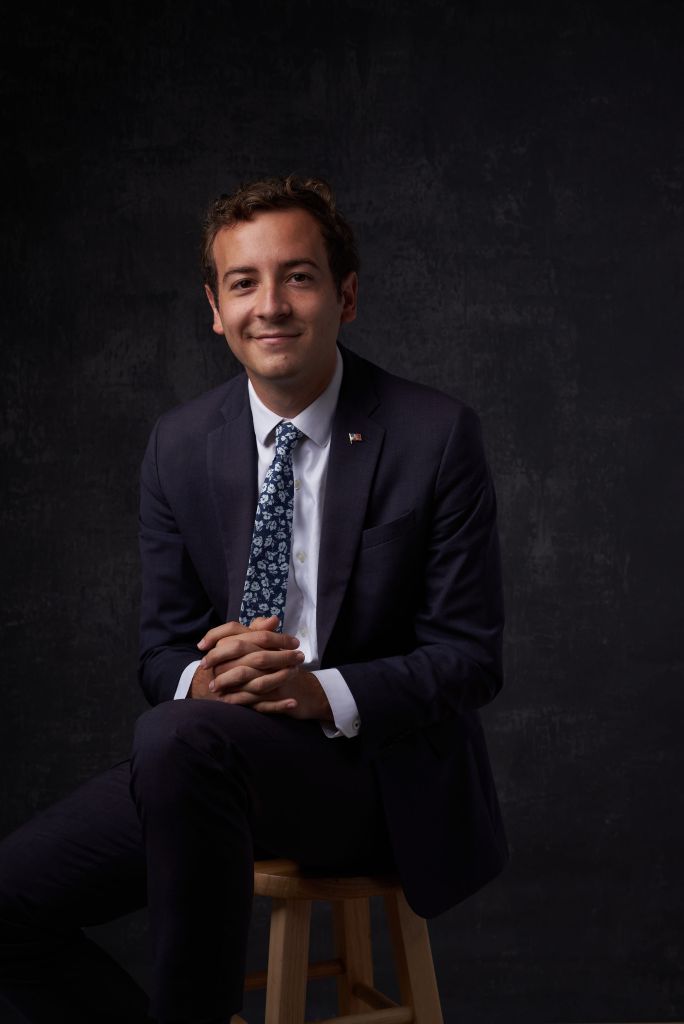
Focus On: Will Haskell

Will Haskell made news in 2018 when he was elected in as Connecticut’s youngest state senator. Haskell represents District 26 of which Westport is a part. 

I grew up in Westport and graduated from the Westport Public Schools. As did my dad, actually! I think those of us who are fortunate enough to grow up in this town have a tremendous responsibility to give back. We benefited from a first-rate education, so now we need to roll up our sleeves and make sure every school in Connecticut has the resources to help students succeed. 

In school, I wasn’t involved in student government, but I was always interested in politics. I majored in Government in college, which has come in handy! And I minored in French, which… hasn’t yet.  

In high school, I used to knock doors for Senator Chris Murphy and Congressman Jim Himes before I was old enough to drive. Of course, I certainly didn’t expect to run for office right out of college. But I felt there was an urgency to many of the problems we were facing, and my generation often didn’t have a seat at the decision-making table. I disagreed with the incumbent state senator on a variety of issues, from gun violence prevention to Paid Family and Medical Leave. So, I decided to come home and start knocking on doors again –this time for my own campaign. 

I really love being a state senator, and in the face of everything that’s happening in Washington, DC, I believe state governments will play a critical role in defending access to healthcare, protecting our environment and promoting dignity and equality. There are so many pressing problems with the state of our state and, more broadly, the state of our politics that I haven’t given much thought to a long-term plan. 

I believe strongly that Connecticut needs workforce housing. Every year, tens of thousands of college students earn their degree in this state, and then they pick up and start their careers elsewhere. Connecticut, and Fairfield County in particular, isn’t affordable or appealing to the next generation of taxpayers. As a 24-year-old, I can tell you first-hand how challenging it can be to find a place to live in town. And this isn’t just a problem for recent graduates –it’s a problem for our local economy. Businesses, both small and large, often tell me that they can’t find a young, diverse, tech-savvy workforce to fill 21st century jobs. So, while I support local control of zoning decisions, I believe communities like ours can only benefit from creating more diversity in housing options. Teachers, firefighters and police officers who serve this community ought to be able to afford to live in this community. 

When I was growing up in Westport, my world extended from Exit 17 to Exit 19. I think a lot of folks who are lucky enough to grow up in town forget that a 10-minute drive on I-95 can carry you across a $100,000 difference in median income. Of course, income inequality is a problem across the country, but nowhere is it more acute than Fairfield County. That’s why I supported an increase in the minimum wage, which will give more than 300,000 Connecticut residents (the majority of whom are women) a raise this year. Representing this community in the State Capitol means spending a lot of time listening to and learning from my colleagues who represent communities that are very different from Westport. 

When it comes to major social issues like COVID preparedness and safety and to racial justice, Westport was hit early on by COVID-19, and I think that jarring experience left a lasting impression on our community. These days, we understand the importance of wearing a mask, heed the advice of public health officials and continue to wash our hands constantly. We all knew someone who was impacted, and we understand the stakes of this moment are simply too high to allow politics to get in the way of science. I give the team at Town Hall a lot of credit for their tireless work to contain the virus, and I think the state as a whole has done a pretty good job as well. Although we’re not out of the woods yet, Connecticut hasn’t shied away from making tough decisions. 

On racial justice, I will never forget the student-led demonstration on the Ruth Steinkraus Cohen bridge in the wake of George Floyd’s murder. I’ve been to a lot of demonstrations on that bridge; in support of the Paris Climate Accord, in opposition to Justice Kavanaugh’s confirmation, in disgust at children being put in cages at the border. I had never seen a crowd this large, and frankly, this young. Students from my alma mater spoke bravely and eloquently about the need for increased oversight in policing and increased diversity in town. Elected officials didn’t speak — we listened. Young people led the way. If that isn’t a metaphor for what we need in politics right now, I don’t know what is. 

Young people led the way. If that isn’t a metaphor for what we need in politics right now, I don’t know what is. 

There’s a ton of work to do in the months and years ahead. One issue that particularly interests me is increasing the number of teachers of color in Westport. Research indicates that having even one Black teacher in an elementary school increases the likelihood that a Black student will graduate by 39%. Having a more diverse faculty is beneficial to students of all races and ethnicities, but sadly less than 7% of Connecticut teachers are people of color. I don’t remember many people of color at the head of the classroom during my time in the Westport Public Schools, and I hope the state can play a role in changing that. 

I spend a lot of time talking with our campaign interns about how their lives have changed so dramatically, and my heart breaks for all the sacrifices they’ve made. I know it’s tempting to flout the rules and return to some sense of normalcy. All I can say is the decisions we make today will either save lives tomorrow or put them into jeopardy. Our generation tends to feel invincible to the threat of COVID-19, but keep in mind that the safety of our parents and grandparents’ rests on our shoulders. The more we adhere to the advice of public health officials, the sooner we can turn the page and begin a better chapter in life. 

This public health crisis has become an economic crisis, with too many small businesses struggling to keep their doors open. Take a walk down Main Street and you’ll see all the work that lies ahead to make this community more hospitable to entrepreneurs. If I have an opportunity to continue serving, I’ll be focused on extending a helping hand to small businesses and lowering the cost of healthcare. With the price of healthcare skyrocketing, more than 50% of small businesses in Connecticut can’t afford to provide their employees with healthcare coverage. I hope that Connecticut will enact a public option next year, introducing competition into the insurance marketplace and helping small businesses thrive. 

If I were to sum it up what keeps me up at night, it’s the fact that some people are so frustrated by what they see on TV, they are retreating from politics. Regardless of your political beliefs, this is a moment that calls for rolling up your sleeves, not throwing up your hands. We can’t sit back and wait for somebody else to restore decency, respect and reason to our government. As President Obama said, “we are the ones we’ve been waiting for.” I hope this terrible year inspires people to lean in, not step back.  


Explore More of “Westport In Focus”

To read more of the museums long lens oral histories please visit the Westport In Focus page.

Focus On: Rev. Dr. John T. Morehouse

Rev. Dr. John T. Morehouse, Senior Minister of the Unitarian Church in Westport has lived in Westport since 2015. 
 

The Morehouses have been living in Fairfield for centuries. Some are undoubtedly distant relatives. I am also a descendant of Noah Webster who has roots in this area. I find that fact especially ironic because I am such a terrible speller. My great grandfather the Rev. Daniel Webster Morehouse served as a Unitarian field secretary for Western MA and CT American Unitarian Association in the late 19th century. I grew up in Croton-on-Hudson NY.  

I see myself as a transformer and feel honored to be here now. 

Over the course of COVID, we quarantined with my daughter and her partner. With two very different generations in the house we all have learned a great deal.  As a father and husband, I want to do all I can to protect my family but as a minister that focus is much wider. I had to constantly balance my desire to protect the ones I love with the need to reach out to those I serve. This balance becomes harder to maintain as we begin to open up as a congregation at this important time in history.  

Social and racial justice is at the heart of our emerging faith as a progressive religious people. We have long stood behind the Black Lives Matter movement. We are committed to understanding our own white privilege and then acting our faith as allies for people of color. I’d like to see Westport keep opening to new perspectives and not be defensive. We all have something to learn. 

Social and racial justice is at the heart of our emerging faith as a progressive religious people.

When it comes to re-opening we must keep our options open. We will continue our on line worship and add small gatherings. We need to continually connect with one another in order to bring one another along. There is no normal here. It’s hard work and it will lead to a new community.


On September 23, 2020, Reverend Dr. Morehouse offered a letter to his Westport congregation reflecting upon the importance of the legacy of Supreme Court Justice Ruth Bader Ginsburg who died on Friday, September 18th. Read his letter here.


Explore More of “Westport In Focus”

To read more of the museums long lens oral histories please visit the Westport In Focus page.