Step Into the Roaring Twenties: Fitzgerald’s Summer in Westport – A Tour Like No Other!
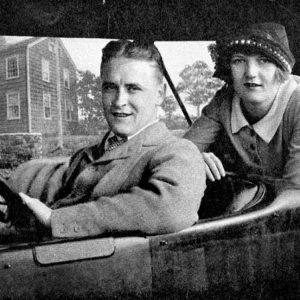
Picture this: It’s the summer of 1920, and Westport, a quiet farm town, becomes the summer escape for one of New York’s most glamorous couples—F. Scott and Zelda Fitzgerald. Seeking a breath of fresh air from their whirlwind Jazz Age lifestyle, the Fitzgeralds retreat to a charming 18th-century farmhouse, a silent witness to revolution and the birth of a nation.
In this idyllic setting, Zelda swims in the sparkling waters of the Long Island Sound, while Scott, inspired by the calm, works furiously on what would become his magnum opus—The Great Gatsby. The magic of this summer shaped his legendary novel, and now you have the chance to walk in the very footsteps that inspired one of the greatest American tales ever told.
Join us for a lively and immersive 90-minute tour through the stunning landscapes that once captivated the Fitzgeralds. As you stroll through the picturesque sites that influenced Scott’s writing, you’ll step back in time to a world of flappers, jazz, and literary genius. This isn’t just a tour—it’s a journey into the heart of the Jazz Age.
Be prepared for a vigorous, yet stunning walk through one of the East Coast’s most enchanting settings. Don’t forget to bring water and wear your most comfortable shoes for this unforgettable, Gatsby-esque adventure.
PARKING INFORMATION: Guests should park in Lot F at Longshore Club Park, just past the E.R. Strait marina. Park along the asphalt and dirt areas.
Tickets are $20 for members and $25 for nonmembers. Reservations are required, so be sure to secure your spot today! Space is limited to just 25 lucky guests per tour. Additional tours may be added if demand is high. If the tour sells out or you’re interested in a private tour, simply email programming@westporthistory.org.
Tickets are nonrefundable. If you need to cancel, your ticket will be considered a donation, and we will gladly issue you a donation receipt.
Don’t miss your chance to immerse yourself in the glamour and excitement of the Jazz Age! Register today and experience the magic of the Fitzgeralds’ Westport.
Westport Museum is accessible via public transit! The Westport-Saugatuck railroad station has connections on the MTA New Haven line from Norwalk, Bridgeport, Stratford, Milford, and New Haven, and more. Uber 2.3 miles to the Museum or take the Norwalk Wheels bus transit system when available to Post Road West at Myrtle Avenue, which is a brief 7-minute walk from the Museum!
Park on Myrtle Avenue and Avery Place or behind Westport Town Hall or in the Baldwin Parking lot. Westport Museum is a privately funded 501(c)3 museum not affiliated with or managed by Westport Town government. Please support our work by donating here.
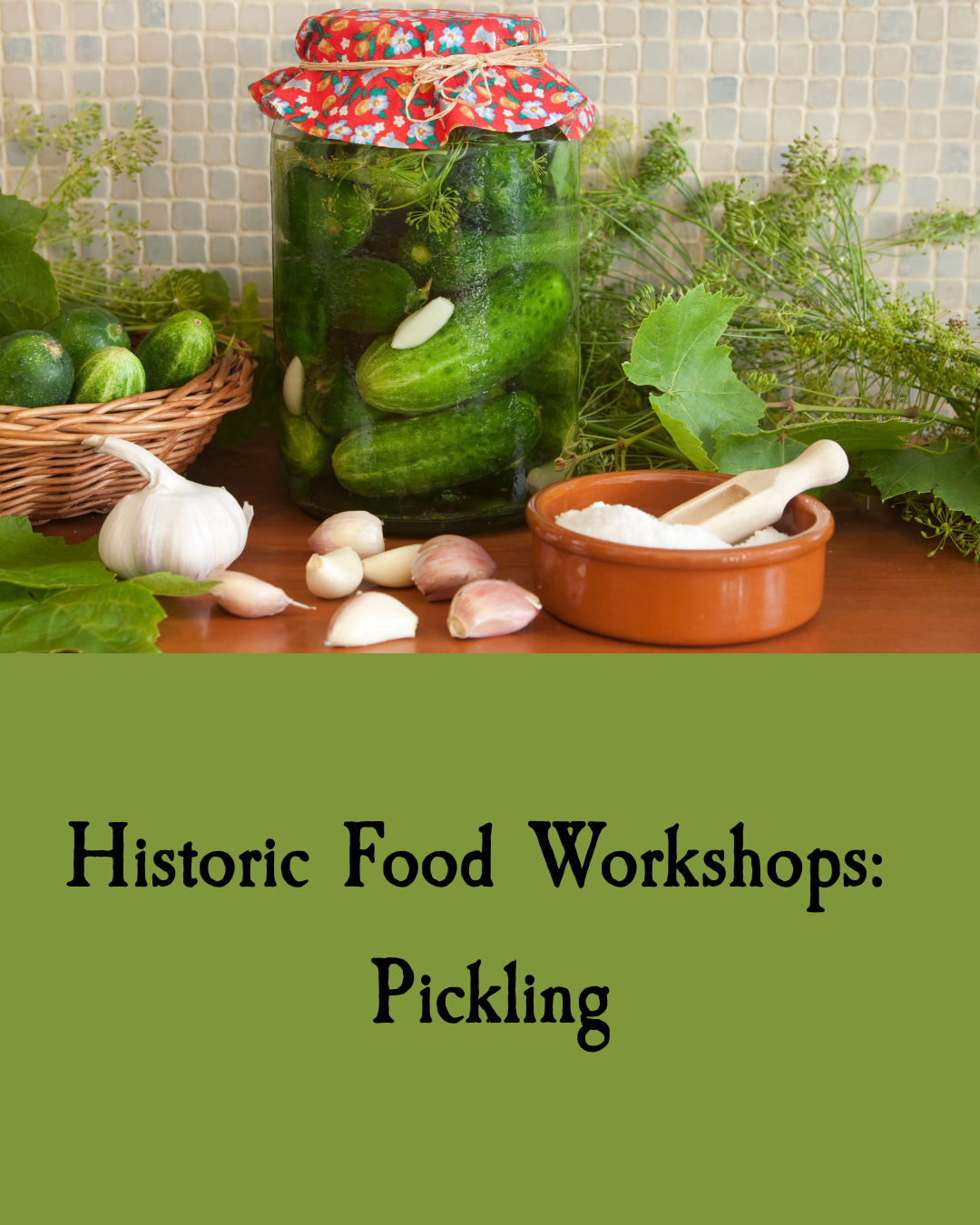
ou know pickles from the supermarket, but did you know you can easily make your own? Pickling is a historic way of preserving food to keep it from spoiling. Throughout history, cooks rich and poor pickled vegetables and fruit to have food all year long. Quick refrigerator pickles use only vinegar, sugar, salt, and your favorite flavorings. They don’t require a lot of ingredients or complicated know-how and can be kept in the refrigerator for your next picnic!
Learn how to make quick refrigerator pickles using just a few simple ingredients. Discover some of the history and the science behind pickling and take home a jar you have made. You will even be able to create your own logo to put on your jar. All materials supplied by the Museum.
Westport Museum is accessible via public transit! The Westport-Saugatuck railroad station has connections on the MTA New Haven line from Norwalk, Bridgeport, Stratford, Milford, and New Haven, and more. Uber 2.3 miles to the Museum or take the Norwalk Wheels bus transit system when available to Post Road West at Myrtle Avenue, which is a brief 7-minute walk from the Museum!
Park on Myrtle Avenue and Avery Place or behind Westport Town Hall or in the Baldwin Parking lot. Westport Museum is a 501(c)3 museum not affiliated with or funded by the Town of Westport. Please support our work by donating here.
August 7 2pm to 3pm
$15 covers event only, museum admission additional
As the government continues its attacks on various American institutions, its real goal is to own and control how American history is told. Large museums, libraries, and theaters are chronically underfunded and underendowed. They depend on government funding and are being hard hit.
That’s why we should look to the nation’s smallest museums and culture centers. These organizations may receive some government dollars—usually from their state humanities councils. But small libraries and museums are out of the reach of the current administration’s intrusion for a simple reason: they usually don’t receive much, if any, government funding. And there are a lot of them: Of the 35,000 museums in the United States, the majority are considered “small”. Local, privately funded historical museums, libraries, and art galleries have the power to defy any erasure of our history’s inconvenient truths.
A key part of the Museum’s Remembered exhibit was to share the history of African enslavement in the Town and in the state. Original deeds of sale and probate documents gifting enslaved people from the Museum’s archives were a key part of the exhibition
We have almost 20,000 history museums in our nation. About half of them operate with a budget of less than $100,000 per year. Despite their size, many have impressive archival collections. It’s in these important collections that we can learn how everyday people recorded their stories and revealed the world they lived in. These records are a form of living history and testimony – unedited and uncensored for any future audience or political moment.
This is important. As the federal government erases holistic history in places like the National Archives, Library of Congress, and The Smithsonian, small organizations are holding tens of thousands of pages of historic proof, from pre-colonial times to the present.
Local history museums, historical societies, and historic homes do their work on a shoestring, often depending on dedicated volunteers. Yes, we can march, and we can boycott, but we can also do something powerful and immediate to preserve our own history and protect our democracy: We can donate money, give time, and loan expertise to small, local museums and libraries. These institutions are the gathering places for our own voices, our own authority.
Year over year, surveyed Americans say that museums are among their most trusted resources—rating higher than the media and even family and friends. Only libraries get more trust. The ability of smaller, local institutions to shape discussions of cornerstone American issues should not be underestimated. They hold America’s historical receipts.
Getting involved with private, local museums will provide desperately needed fuel to keep them up and running and open. Boosting small cultural organizations in your area helps you influence the range of ideas you want to see explored right where you live.
The memorial wall of names of some of Westport’s enslaved people was a key feature in the nationally-award winning exhibition: Remembered: The History of African Americans in Westport. The names are permanently memorialized in brick in the Museum’s garden.
Certainly, some of these organizations may espouse the exclusionary values that the administration wants to fund. As a board member of a state humanities council, I know from my counterparts in conservative states that they enjoy widespread support from their Republican elected officials.
But it would be foolish to tie the urgency for local funding to small institutions to political goal posts or support for a progressive versus conservative interpretation of history. In a democracy, we should all be able to ideologically disagree yet co-exist.
The 2019 exhibition “Liberty To Set Down” shared the story of migration and immigration in Westport from colonial times to present.
Instead, enthusiastic individual support for local institutions is about fighting authoritarianism and government overreach. For everyone who values fact-based historical inquiry the time is now: We need to put our money where our mouths are and support the little guys holding the line.
250 years ago, the shot heard ‘round the world at the battle of Lexington and Concord in Massachusetts, pitted a small group of radical upstarts against the tyrannical might of an insurmountably huge enemy. We again find ourselves fighting an authoritarian leviathan in a war that is less about ideological disagreement and squarely about erasing truth.
We won the right to our own nation with grassroots organization, dedication and the support of the everyday person. We can do it again.
In the culture war over who gets to “own” history–now as then–the winner will not emerge from a clash of titans. They will emerge from battle between David and Goliath.
For many the War for Independence conjures images of courageous local men defending the ideals of America: liberty and justice for all. The rallying cry for American patriots looking to secede from the British Union was “No taxation without representation” an argument laid out by Patrick Henry, a Virginia Farmer, concisely stating the American colonies opposition to a series of crown taxes meant to help defray costs of the French and Indian War (1754-1763). These included taxes on paper (The Stamp Act); molasses and sugar (The Sugar Act) and Tea (The Tea Act). These tariffs on goods used every day by colonial Americans—as well as business commodities for American merchants–drove the colonies towards revolution. However, this version of history that says all colonial Americans fought in solidarity against England to create our nation is incorrect.
Robert Lambdin’s 1955 “Landing at Compo Beach” depicts a romanticized version of the 1777 Danbury Raid. In reality 1,800 British troops landed in Westport during a miserably rainy evening with over 300 local men loyal to the crown. Courtesy of the Westport Schools Permanent Art Collection.
When asked about the Revolutionary War modern Americans think of the revolutionaries, or Patriots as representing the overwhelming number of Americans. However, only between 30-40 percent of colonists approved of breaking away from the King.
The wealthiest colonists were divided in their support between what they saw as the treasonous activities of the revolutionaries or remaining loyal to the crown. Tories, Loyalists, and King’s men were those who wished to remain subjects of Great Britain, representing an estimated 20 percent of the population. They often advocated for reform to controversial legislation rather than all out revolt.
But the real bit of hidden history is that the majority of colonists did not choose a side, choosing instead to remain neutral and continuing with their lives largely unaffected. There was also a significant population who were not given a voice—enslaved Africans and African Americans, Indigenous peoples, and women. There are many examples of individuals from these groups who did speak up—and acted on both sides—but by far were—and remain—overlooked or forgotten.
Those Who Fought for Freedom
The way American Patriots are usually depicted is also a far cry from the truth. The so-called “Founding Fathers” are normally thought of as older men, but the average signer of the Declaration of Independence was 44 years old, and many of the key figures were in their 20s or 30s in 1776—including Benedict Arnold, 35; Thomas Jefferson, 33; Alexander Hamilton, 21; and the Marquis de Lafayette, 18.
Highly accomplished poet and writer, Wheatley was the first enslaved African in America to have her work published. An unidentified artist created this engraving of Wheatley in 1773. Courtesy of the National Portrait Gallery, Smithsonian Institution.
It wasn’t only men but women like Sybil Ludington, Deborah Sampson, and Phillis Wheatley, who took action during the revolution. When her father, Colonel Henry Ludington, was called upon to help defend Danbury’s supply stores against British invasion in April 1777, it was left to Sybil to ride through the night and muster patriot soldiers in Durham and Putnam Counties, New York. Although her ride was twice as far as Paul Revere’s famous ride and Ludington completed her circuit where Revere did not, her bravery was not extolled in her time.
Deborah Sampson disguised herself as a man to fight, and despite being shot served for over a year and received a small army pension after the war. Boston Poet Phillis Wheatly didn’t take up physical arms but used her education to express her support for the fight for freedom and against bondage—a topic which she was personally familiar with as an enslaved woman.
What Can We Take Away?
As we draw closer to the 250th anniversary of the signing of the Declaration of Independence in 2026, it remains imperative to confront the realities of the revolution. Colonists were divided over their disapproval of what they saw as an oppressive government led by a tyrannical ruler but, as in our own current political atmosphere, most chose to stay out of the political debate except for a vocal minority on both sides who monopolized the conversation. In America, national divide has historic precedent, and the United States has never been more ideologically divided as it is today.
Ultimately, the United States was created through the actions of those fighting for the rights outlined in the Declaration of Independence—individuals who many considered “traitors” in their own time. Uniting to stand against injustice, misinformation, and bigotry is the only way to create a system that future generations will remember as revolutionary.
Confronting the divide during the revolution and today highlights the importance of engagement, of getting involved, of taking a stand. Avoiding action, as many colonists chose, allows others to make a choice without consent. Your voice is lost in the critical moments taking place in our current social climate if you choose to remain silent.
Only by remembering and emulating those who stood against tyranny can Americans, perhaps, uphold the belief “that all men are created equal, that they are endowed by their Creator with certain unalienable Rights, that among these are Life, Liberty and the pursuit of Happiness.”
One hundred years after Westport’s segregated semi-pro football team took the field, systematic racism still exists in the sport
By Alexander Filippides
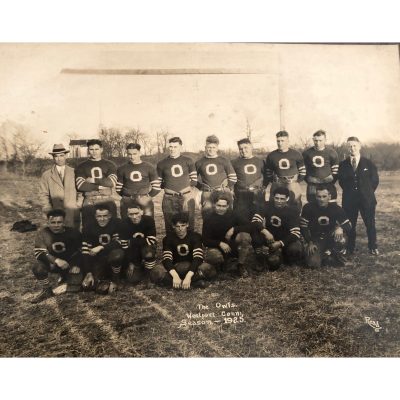
Westport Owls team photo, 1925. From the collection of the Westport Museum for History & Culture.
Did you know Westport had its own semi-professional football team? The team, known as the Westport Owls, competed locally starting in the 1920s. The team is not only notable for its regional relevance, but also for its sometimes-unbelievable stories, like in one 1927 article from the Bridgeport Telegram where Michael Cuseo, a wide receiver (or “end,” as the position was known at the time), was arrested on the field for inciting a gang fight at a dance in Easton. Incredibly enough, Cuseo would make bail in time to participate in the Owls game that evening against the Bridgeport Black Rock Pirates.
Looking at the team photo, something else is immediately clear about the Owls: The team was entirely White.
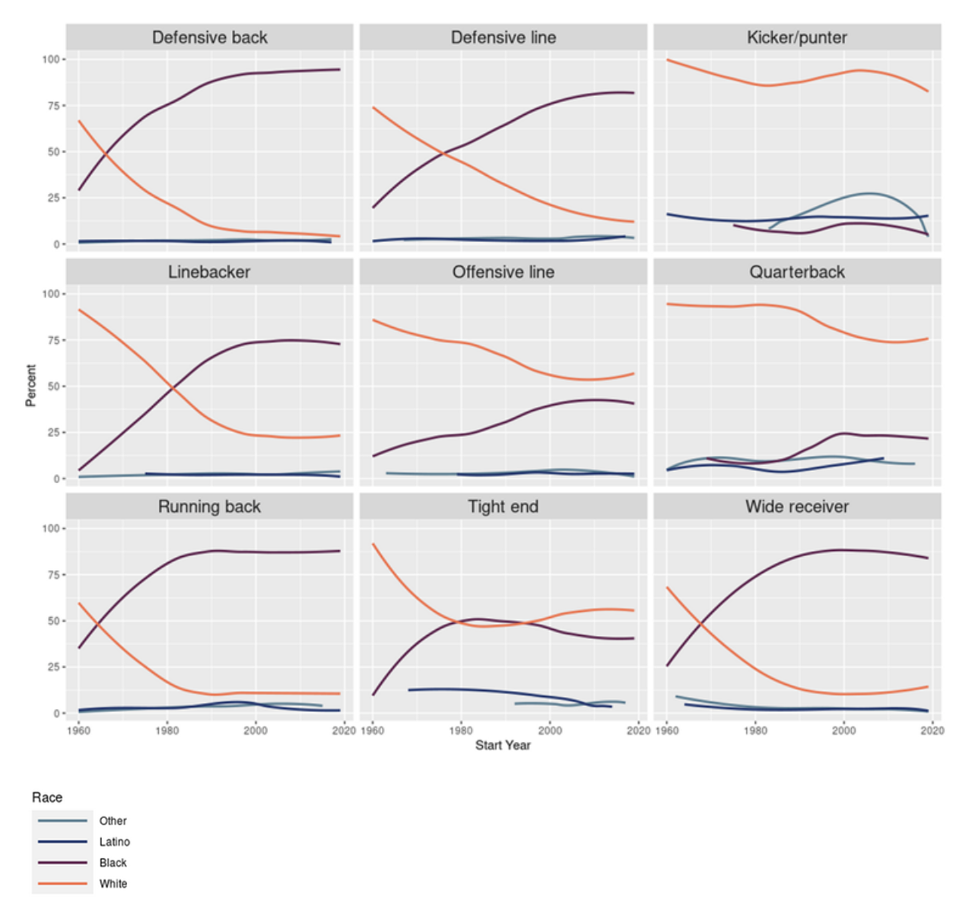
This is hardly surprising; like many aspects of American society before the Civil Rights Act of 1960, semi-professional and professional sports alike were usually segregated. But when looking at the current National Football League (NFL) teams we see a league that is still segregated.
Table showing a breakdown of NFL positions by race, 2023. Courtesy of the Football Players Health Study at Harvard University.
Historic policies of the NFL also shed light on the ways in which African American players have been sidelined: “Within-group score conversion,” better known as “race-norming” is the practice of adjusting a numeric value in a test to account for imagined differences between races. The practice violates civil rights and was outlawed as part of the 1991 Civil Rights Act. For a long time, the NFL officially made use of race-norming when conducting concussion testing on its players. It was an official stance of the NFL that Black players had a lower baseline cognitive function than White players and were tested as such. When do you think this explicitly racist practice was ended in the NFL?
It would not be until 2021, when the NFL made a statement officially bringing an end to the practice. The decision followed the payment of a multimillion-dollar lawsuit by former NFL players. Race-norming made it impossible for generations of players who suffered brain damage from concussions to gain compensation for injuries. Worse yet, it was likely the reason that a myriad of serious brain injuries went untreated.
When discrimination is legitimized and propagated by an institution for so long, it can become embedded as part of the culture. Within the NFL, the systematic nature of this discrimination made it palatable for the thousands of people involved in the organization.
While the practice of race-norming may no longer be in effect, without meaningful reflection on why such practices were accepted for so long, nothing will fundamentally change.
Though there are no official rules and regulations codifying segregation or discrimination in the league, and even with laws that ban these practices outright, the cultural and societal conditions that allowed for them must be addressed if our goal is equity regardless of skin color.
This phenomenon isn’t exclusive to the NFL. In our society today, we continue to see a clear disparity between the economic well-being of People of Color and White People. Not necessarily because of any singular law, regulation, or attitude, but because the system that upheld the oppression of Black and Brown Americans has never been reformed in such a way that addresses the root issues that breed continued discrimination in our country. Singular laws and regulations cannot fundamentally change an inherently racist system.
While this clear and persistent inequity is disheartening, being aware of our own unconscious biases, recognizing and dismantling systems of oppression, and uplifting those from underrepresented communities can encourage the creation of a more equitable society.
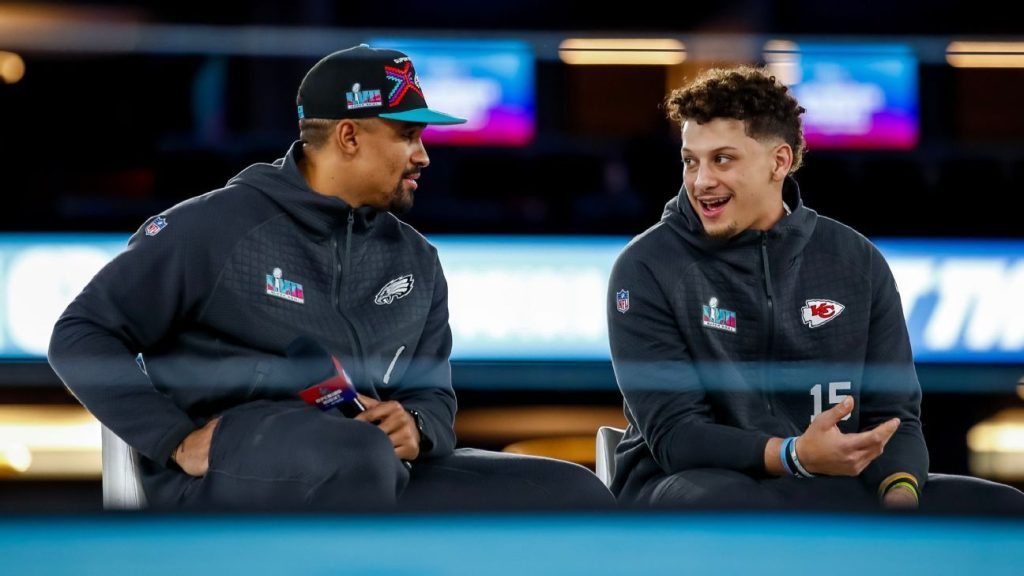
Patrick Mahomes (right), quarterback of the Kansas City Chiefs, and Jalen Hurts (left), quarterback of the Philadelphia Eagles, at an interview together, 2025. Courtesy of Carolina Brehman, accessed via ESPN .
The 59th Superbowl will be the first to feature two Black starting quarterbacks. While still a position that is mostly White, trends show that more Black quarterbacks have been entering the league since the 1990s. There are real reasons to believe that change can happen, but it requires an active commitment by all of us to work towards a world where we are all equal.