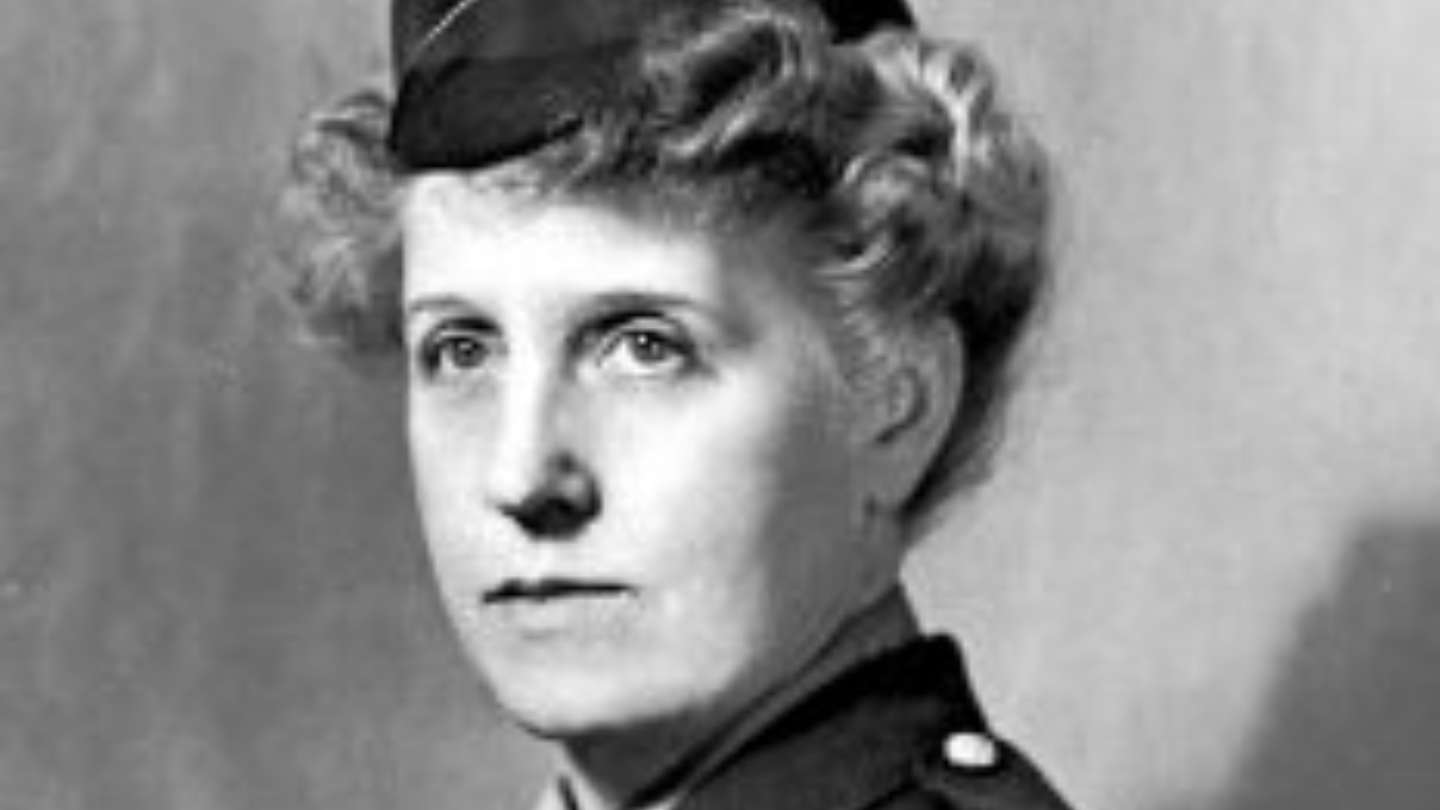
Dragon Lady: The Life of Sigrid Schultz

On New Year’s Day in 1935, American reporter Sigrid Schultz witnessed raucous celebrations in Germany’s Black Forest. Shooting rifles into the air, the members of the fast-rising National Socialist party celebrated their leader’s rising hegemony over the German political landscape. Their leader was Adolf Hitler and they were Nazis.

Schultz recorded all she saw and sent it via telegram to her editor at The Chicago Tribune:

“…year two of Hitler’s Fuehrer Germany finds Germany comparable to a mass of cooling lava after a volcano eruption with some people getting burned and nobody certain where the lava will finally settle…”

Schultz had been the Chicago Tribune’s Central Europe Bureau chief for nearly ten years by that time—the first woman to hold the post in a major news organization. Her reputation for fair and fact-based reporting had gained her the trust of Hermann Göring, the man who would be Hitler’s second in command. It helped that she was a trained chef and gracious hostess who held dinner parties that lured her subjects and gained their trust. From this position of access, the journalist was to get inside information in order to report—and forewarn—of the Third Reich’s insatiable hunger for power and unquenchable thirst for violence that led, ultimately, to the Holocaust.

It was nothing short of remarkable that an American woman was allowed entry into the inner sanctum of the Nazi party. Sigrid Schultz had been born in Chicago and emigrated to Paris with her family at eight years old because her father, a Norwegian immigrant and an artist, had secured several commissions there. Her parents separated within a year and Schultz later wrote in an affidavit explaining her foreign residence that she only saw her father three more times. Her mother continued to live with her in Germany.
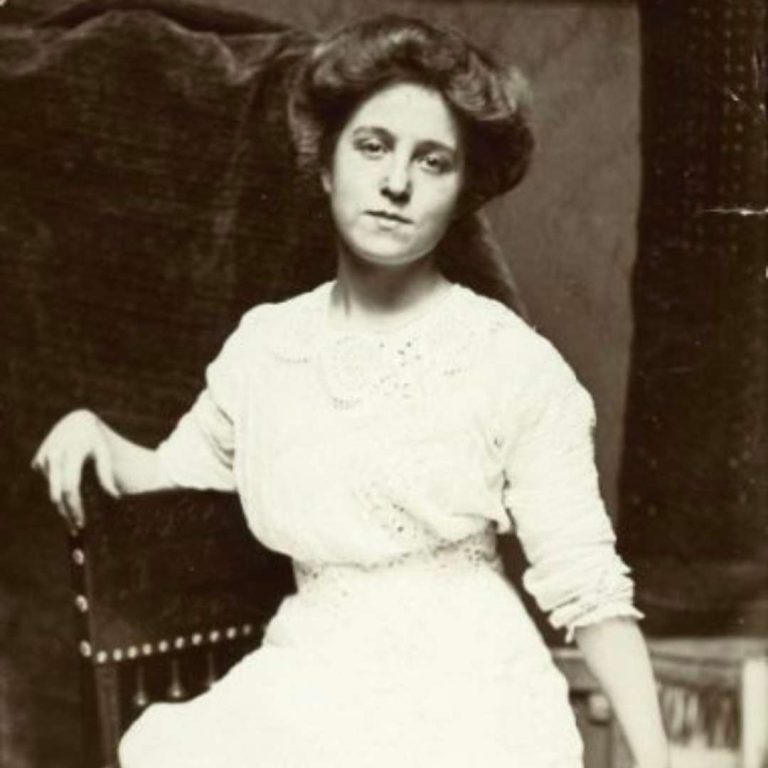
Portrait of Sigrid Schultz as a teenager

Demonstrating a natural aptitude for language, Schultz spoke English, French and German, her mother’s native language. She secured positions as a language teacher in Berlin during the First World War when, according to some sources, her mother fell ill and they could not return to America. When the Chicago Tribune was seeking multilingual in-country reporters, Schultz secured the job, rising to bureau chief by 1926.

Schultz at the age of 17, Courtesy of the Wisconsin Historical Society

But with the growing power of Hitler’s Nazi party, Schultz’ job became more dangerous. While she saw clear evidence of Hitler’s evil intentions for war and Jewish extermination she had to remain impersonal in order to maintain her position of access—especially after other Allied journalists had been expelled from Germany. Taking extreme risks, Schultz filed her most explosive and revealing reports under a pseudonym while traveling outside of Germany.

Göring came to suspect Schultz and was enraged by her intrepid reporting, calling her “that dragon from Chicago.” He had several attempts made on her life yet she outsmarted him every time. Realizing the escalating danger of her position, she sent her mother back to the United States to live in their Westport home in 1938. Eventually the reporter was forced to leave Germany after being injured in an Allied air raid. She recuperated in Spain but came to back to Westport recover further. Schultz attempted to re-enter Germany and resume her reporting but her visa was denied.

Sigrid Schultz lived in Westport for another forty years. From her home at 35 Elm Street, she continued to write tirelessly about antisemitism and the dangers of national extremism. Despite her remarkable achievements as an early female pioneer of investigative journalism, today few, even within the field, remember the name Sigrid Schultz. In partnership with the museum and other repositories of Schultz papers, Dr. David Milne at the University of East Anglia, is rediscovering the life of this remarkable woman for an official biography. 

Yet, the reporter courts controversy from the grave as a group of amateur history enthusiasts have claimed to find proof that Schultz chose to hide the fact that she was Jewish based on a single ship’s manifest transporting Jewish refugees from Europe in 1936.  Schultz’ mother Hedwig, who was sent back to America by her daughter, is listed among the ship’s “Hebrew” passengers with a ditto mark next to her name in the column indicating ethnicity. While tantalizing, it is a lone document among plentiful evidence to the contrary that has been amassed by Schultz scholars. The ditto mark was likely no more than an error by ship’s crew members and overlooked by immigration officers. In Westport, Hedwig was a regular church goer as indicated by her letters to Sigrid. 

Regardless of her religious identification Sigrid Schultz was a fearless reporter and prescient observer of human nature. She was celebrated in Westport Museum’s exhibit Dragon Lady: The Life of Sigrid Schultz in 2021, and a free virtual component is available online at virtualhistorywestport.org. 
We All Scream!

It’s October or “Spooky Season” as my teenage daughter likes to call it. There is good fun in getting a good fright. After all, who doesn’t love a good scream from time to time?

Here at the Museum, we host Spooktober, a month of programming paying homage to the creepy and sinister events that are the hallmark of this time of year.

From our resurrection of author Washington Irving to retell his macabre story about the headless horseman from his famed book The Legend of Sleepy Hollow to our always-anticipated cemetery tours on October 12th and 19th to our Haunted House on October 26th–we’re all in on giving you a fun-filled fright.

Because we are history museum, we like to base our Halloween happenings on real stories from the past. Westport, like other colonial-era towns, has plenty of scary events from days gone by. At our First Annual Haunted House last year, we featured the story of Westport’s Witches, four local women–Mercy Disbrow, Goodie Miller, Elizabeth Clawson and Mary Staples–who were targeted in the panic and terror of the witch trials that plagued New England and which began in Salem, Massachusetts in 1692.

A spooky teaser from last first annual Spooktober!

Mrs. Miller was considered unusual in her behavior and Mrs. Staples was shunned for being outspoken. Suspicion also fell on Mrs. Staples as she had previously been accused in 1653 during the Connecticut Witch Panic. Mrs. Staples was known for being “shrewd” and had little patience for Puritan extremes—a criminal offense in Connecticut, a colony known at the time to be far more stringent in its religious ways than even the Massachusetts.

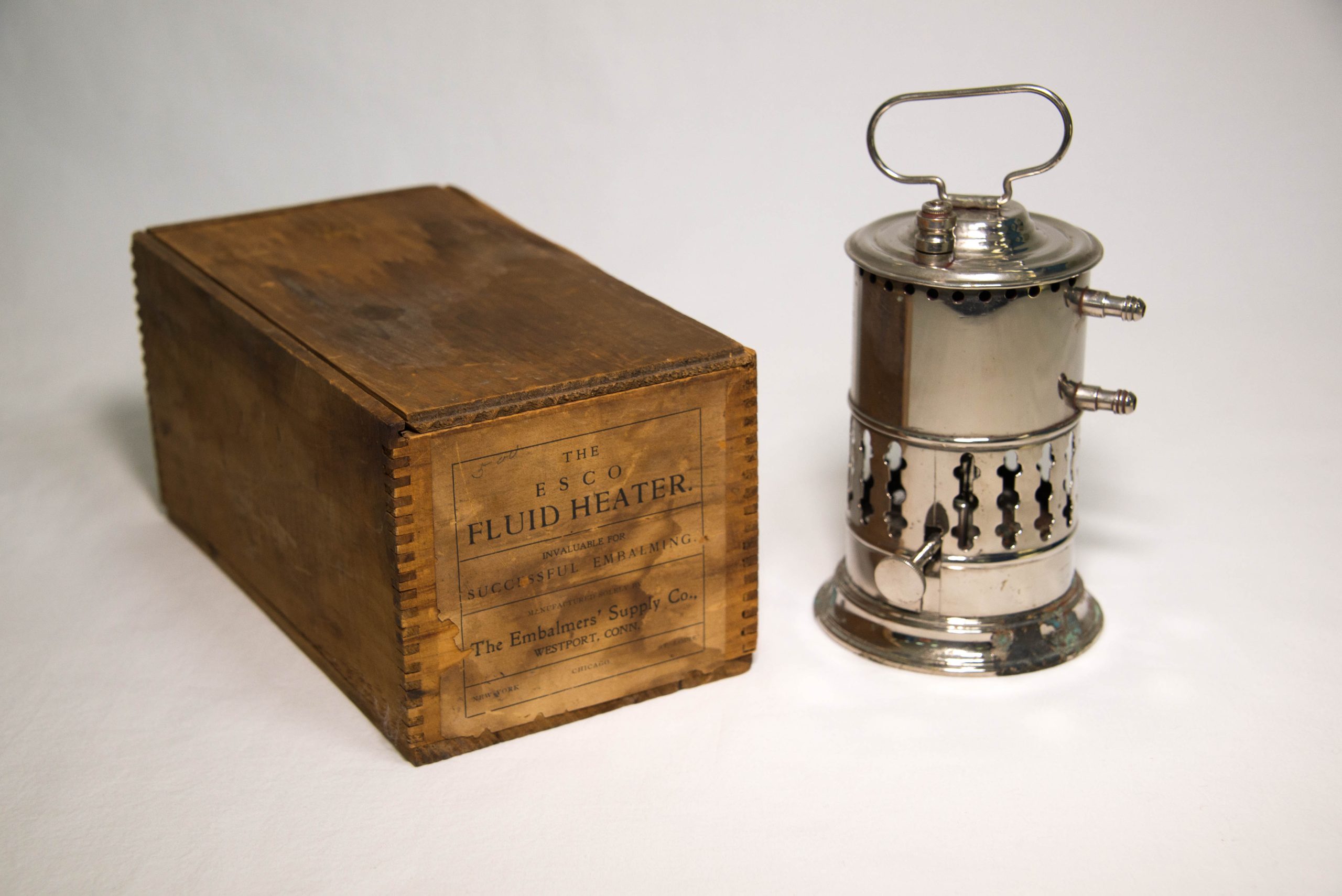
During last year’s Haunted House we also shared ghoulish histories closer to our own times: In the late 19th and early 20th centuries, Westport was the home of two concerns that made money on the business of the death. The Embalmers Supply Company (ESCO) made its preservation fluids at a factory on the Saugatuck River and the Saugatuck Manufacturing Company also on the riverfront, employed children in its trade of making buttons.

So, what frights do we have in store for you at THIS year’s 2nd Annual Haunted House? Why not join us and see? Get into your costumes and join the other goblins, ghosts and ghouls that will be convening 25 Avery Place on October 26th at 6pm for the most historically spooky Halloween event in town.

And who knows, you might actually get a peek at one of the real ghosts who frequent the Museum headquarters at Bradley-Wheeler House …

See you there!

What’s In a Name?

In a world where things change so rapidly, one can always depend on history to comfortingly, placidly stay the same—right? 

Wrong. 

In fact, nothing could be further from the truth.  

It is only the facts of the past that remain unchanged. The truth of what happened, when, who was involved, who gained and who lost—these facts are irrefutable. Whether those facts are accurately retold—or told from all perspectives—is another matter entirely.  

It’s an important distinction because this retelling of facts—or parts of them–is what we call history.  What we know as history is subjective. It is a view of the past told through the eyes of an individual or group of individuals. Usually, that group is the one which holds the power to disseminate information. As such, what we call “history” can be one sided or lacking holistic depth.  

History can be imperfect, but the facts of the past are neither perfect nor imperfect, they simply exist. Standards for museum interpretation as outlined by national accrediting agencies guide us to offer visitors all the facts that we have available to us so that they may draw their own conclusions based on truth versus conjecture. In other words, historians and history organizations are charged with providing as complete a factual view of the past as is possible.  This is particularly important when we work with local schools to provide learning opportunities for students of all ages. 

This modern view of the work we do is actually one that has evolved over time and one which has guided many organizations similar to ours. Like them, we have moved toward creating exhibits and programs based upon facts. In so doing, we’ve also moved toward a clearer understanding of the work we do and its place in the world. 

In 2014 Fairfield Historical Society changed its name to the Fairfield Museum and History Center and in 2018 Stamford Historical Society followed suit. Nationally, Richmond Historical Society was renamed Virginia Museum for History and Culture in 2018. Similar name changes have been undertaken by historical societies in Ohio, Colorado and elsewhere. 

That is why I’m delighted to share that, as of September 28th, with the opening of our newest exhibit Becoming Westport, Westport Historical Society will be now called Westport Museum for History & Culture—a name more factually indicative of what we do. 

While a name change is certainly different, it is not actually new. The Board of Directors voted to change the name of the organization back in 2017 after going through a program called StEPs (Standards and Excellence Program for History Organizations) which was run by Connecticut Humanities. That program allowed the organization’s total operations to be assessed with the goal of creating a strategic plan. As part of that plan, a name change to incorporate “museum” was recommended.  

Perhaps, more interesting, name-changes are a regular part of our long history. Westport Historical Society was founded in 1887 as the Westport Historical Society but the name was changed to Saugatuck Historical Society in 1890 to be more historically representative of the town’s past. After years of non-operation, the Society re-opened in 1958 as the Westport-Weston Historical Society, becoming Westport Historical Society again in the early 1960s. 

So why did the Board of Directors choose to change the name yet again? The new name reflects WHS award-winning museum work and mission to explore history factually and by recognizing the many different aspects of local and regional culture that contribute to the town and larger area. 

There are practical business reasons for the name change as well. The quality of work that WHS has done in the last two years with respect to exhibits, programming, research and collaboration has put it in the category of respected museums. Formally, pursuing museum status allows WHS to apply for better funding opportunities in terms of grants and sponsorship’s. This is incredibly important since we do not receive state or federal funding outside of grants that we may or may not receive in any given year. Town funding that we received in years past as fees for record storage may no longer be available to us in the next budget year. 

Our switch to becoming the Westport Museum for History & Culture follows a trend among local cultural organizations to become more expansive and regional in their scope. The Westport Library’s transformation project, completed in 2019, evolved the library from a simple repository for books to a multimedia center with state-of-the-art performance venues, luring visitors county and statewide. The Westport Arts Center recently moved to a larger locale, changing its name to Museum of Contemporary Art reflective of the world-class shows and expansive scope it has achieved in the last few years. 

Now I know that a name change seems like a pretty big deal—and it is!–but what we are doing inside the museum is even more important. Over the last two years, we’ve been working incredibly hard to enact all the amazing goals in the Strategic Plan that the local community leaders who comprise our Board of Directors worked on with dedication for three years from 2014-2017.  

The great news is that we’ve had some incredible successes in a very short time and with limited resources. Our work revealing all of Westport’s history—stories previously told and those untold—is getting national recognition and we are grateful. 

But we are most grateful for is the chance to continue to do this good work under the umbrella of a new name that signals to Westporters and those beyond our border all that we can do. 

Thank you for being part of our journey—the best is yet to come! 

Ramin Ganeshram

What Are We Really Winning?

By Ramin Ganeshram, Executive Director, September 3rd, 2019

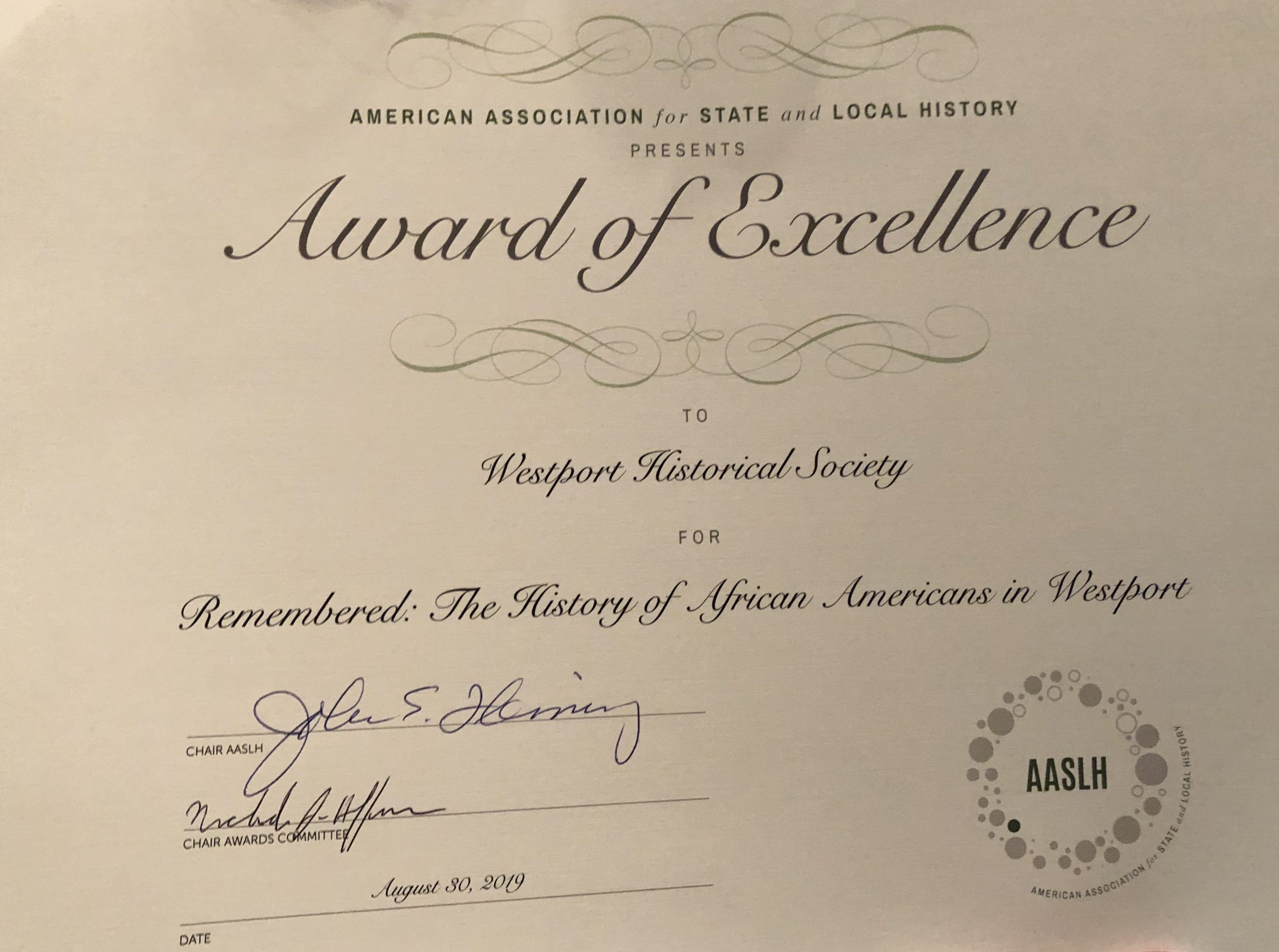
This past Labor Day weekend, while folks were rushing to and from vacation spots we at WHS were taking a trip of a different kind: Myself and board chairperson, Sara Krasne, headed to Philadelphia to receive a prestigious national award for excellence in the museum field.

The award was for our 2018/19 exhibition Remembered: The History of African Americans in Westport which told the story of the significant contributions, achievements and struggles, of black Westporters to the town from its 17th century settlement as enslaved people through to the present time. By examining our colonial New England town, we were able to tell a story that resonates nationwide

It was particularly special to receive this award in Philadelphia—the heart of America’s movement toward Independence and its second capital city.

Perhaps what was most awe-inspiring was being in the same company as museums across the country doing excellent work unearthing the hidden histories of a wider group of Americans than ever before—women, people of color, LGBTQ Americans and differently abled individuals.

Together we are following the charge of cultural organizations—particularly history museums—nationwide to re-examine the past in a holistic way, using primary source material and rigorous research to tell those stories that have been erased.

For many this begs a bigger and quite legitimate question: Why?

Why, many have asked us, not leave well enough alone? Why re-examine a history so many have come to know and love? Why drag “skeletons” out of the closet?

At the simplest level, we are following the standards of the most respected governing institutions in our field such as the American Alliance of Museums which advocates that organizations like ours “conducting primary research do so according to scholarly standards.”

In other words, we use original documents and documentary evidence to present the facts of what happened way back when. Unfettered by a need to editorialize or cast themselves in any light other than the norms of their time, the writers and recorders of this material were, for the most part, purely honest about what happened and how they felt about it.

In pursuing these practical goals as defined by those with the best professional knowledge, we reap greater rewards. We are lucky enough to do work that creates a more inclusive community—that leaves no one out by showing that everyone’s stories matter.

That “someone” could be one of the original Bankside Farmers or a Native Pequot person driven from their land or an enslaved African American in Greens Farms or a Jewish landholder forced to flee Manhattan during the Revolutionary War because of abuse at the hands of the British. It includes artists, performers, merchants, laborers, immigrants, mothers, fathers, activists. It encompasses the most prominent Westporters as well as the most invisible ones.

Our work—and our charge as a museum—is to fill the gaps in our history with untold truths that make our community whole.

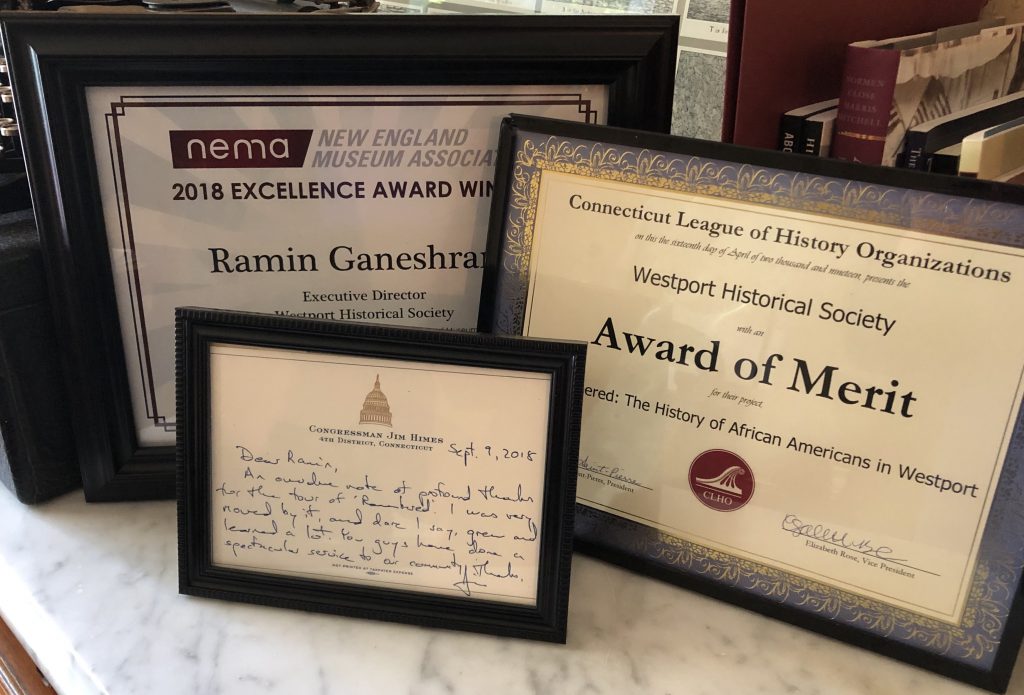
It’s work that doesn’t end and isn’t always easy but we’ve been rewarded with recognition that keeps us going. In the last year WHS has won more awards than it ever has in its long history—including the Connecticut League of History Organizations Award of Merit and a nomination by Congressman Jim Himes for a national award from the Institute for Museum and Library services. I am humbled to have personally received the New England Museum Association award for excellence in the field and to have been named a Paul Cuffe Memorial Fellow at the Munson Institute of Mystic Seaport this past summer. And, of course, there is the AASLH award we were honored to receive this past Saturday.

The greatest reward that we’ve reaped, however, is not these accolades. It is the environment we’ve built at WHS through support and teamwork of our staff, Board of Directors, and Advisory Council Members.

Beginning in 2014-15 and continuing for the next three years, WHS Board of Directors and Advisory Council participated in a program run by the state of Connecticut for small museums and history organizations. That program, called StEPs, allowed these prominent community members to engage with and examine the operations of the organization and vote for a strategic plan that encompassed sweeping change to bring the museum to the next level. Enacting those changes has been our major focus over the last 24 months and has included everything from the physical space to collections management to programming and the quality of our exhibits.

While all of these stakeholders have been integral to our success—joining meetings and learning sessions every step of the way, there is one group that has been most important of all: You.

The public has been, in many ways, our most important partner in transforming WHS into a place where all feel represented with excellence—with a good dose of fun thrown in, of course!

And so, we say thank you—to all of those who have made WHS what it continues to be—a museum that has been amply rewarded with the privilege of reinvigorating history for everyone.